
The Breed
The Holy Dogs of Tibet
For nearly two thousand years, the Tibetan Terrier lived side by side with Buddhist monks in the monasteries high in the Himalayas — a cherished companion, a watchful friend curled by the fire, and a beloved bringer of good fortune to every home lucky enough to have one. Despite the name, they aren’t really terriers at all. They’re an ancient and wonderfully hardy breed, shaped by the mountains and devoted, heart and soul, to their people.
A little history
Two thousand years in the mountains
Tibetan Terriers were raised by monks and nomadic herders high in the Himalayas, where the climate was harsh and the work was real. In the monasteries they were treasured as “holy dogs” — lucky companions and sharp-eyed watchdogs who alerted the monks to anything that didn’t belong. Their small size let them slip through the monastery halls unnoticed, alerting the monks to visitors, strangers, and approaching storms alike, and they were often kept close as good-luck charms, believed to carry the souls of monks who hadn’t quite reached enlightenment. When out with the herders they earned their keep on the move, and centuries of mountain living shaped a dog built for it: large, flat, snowshoe-like feet for crossing deep snow, and a thick double coat to weather the cold. They were never bred for the show ring, and they were rarely bred for sale either — a good TT was given as a gift of friendship and good fortune, never something you simply bought.
The breed reached the West in the 1920s, when Dr. Agnes Greig, a physician working in India, was given a small gold-and-white TT named Bunti as thanks for saving a patient’s life. From that one dog she began the careful breeding program that introduced the Tibetan Terrier to the rest of the world. They didn’t arrive in the United States until 1956, and weren’t recognized by the AKC until 1973 — part of why, even now, they remain such a rare and well-kept secret.

The woman behind the breed
Dr. Agnes R. H. Greig
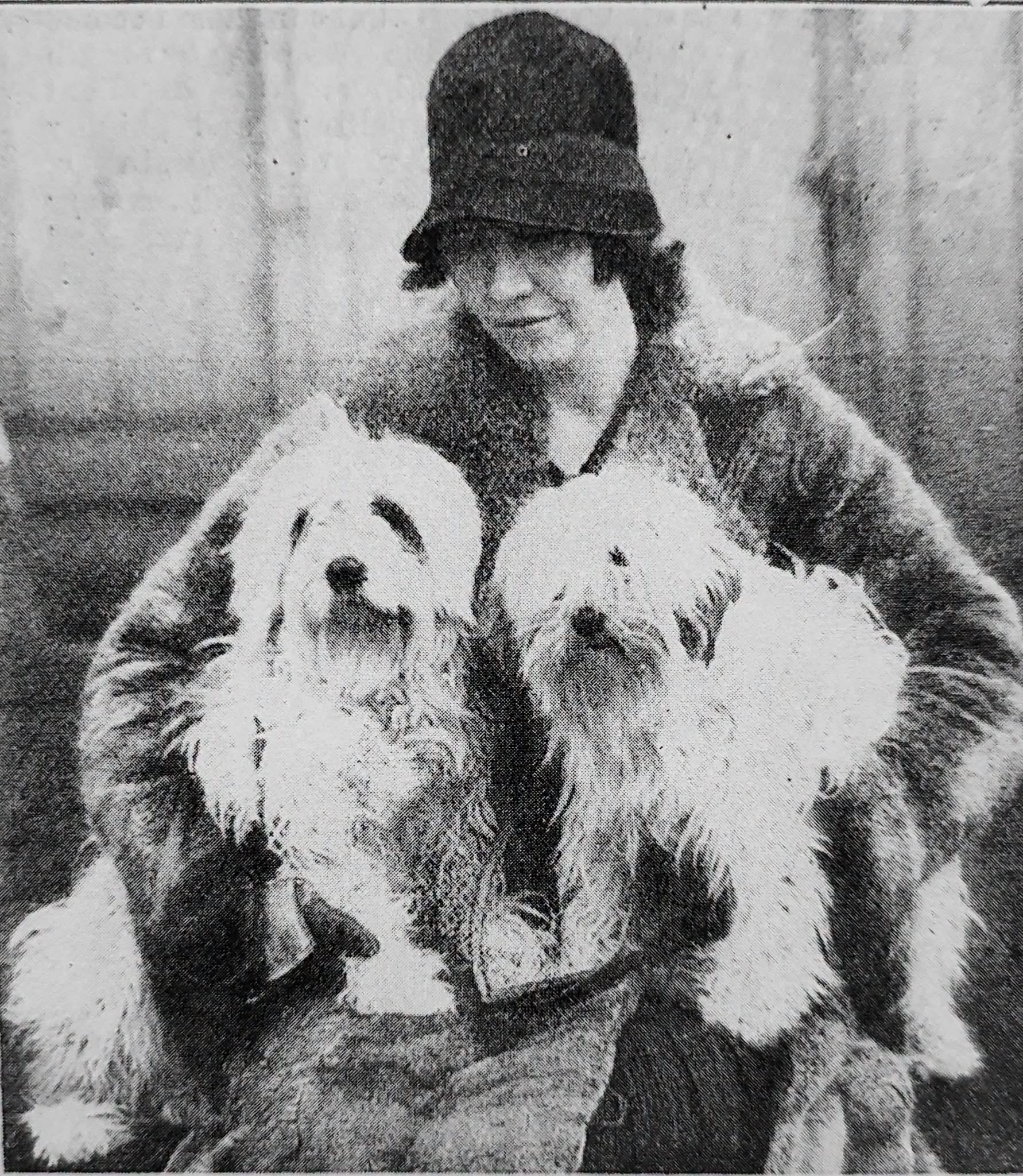
Nearly every Tibetan Terrier in the West today traces back to one remarkable woman. Dr. Agnes R. H. Greig was an English physician serving with the Women’s Medical Service of India in the 1920s, working at a hospital near the Tibetan border.
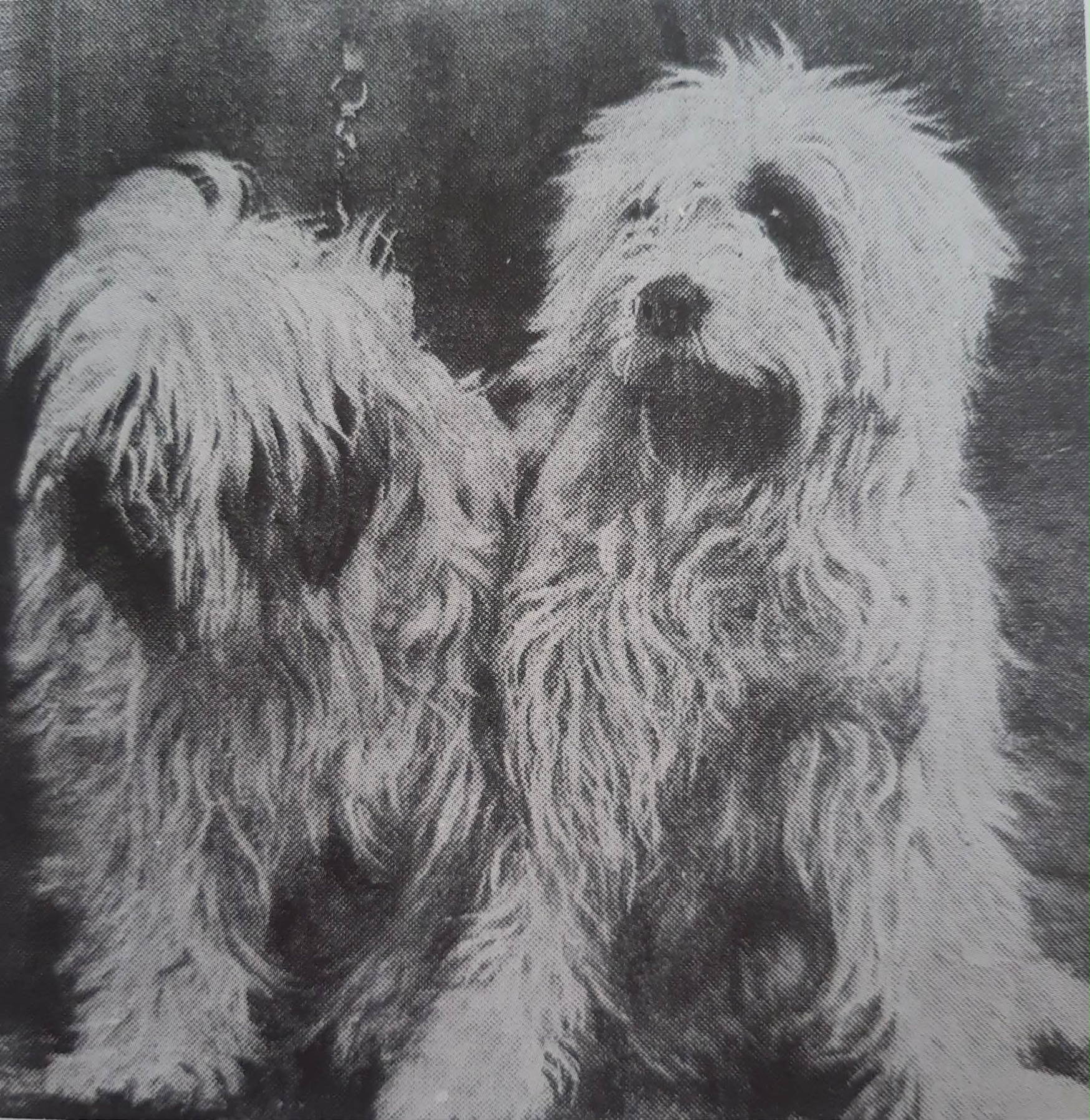
In 1922, while stationed at Cawnpore (today’s Kanpur), she performed life-saving abdominal surgery on a patient who had travelled down from Tibet. Money was offered and refused; in their culture a gift of real value was a dog, and so the grateful family gave her a small gold-and-white puppy named Bunti. Captivated by the little dog, Dr. Greig later acquired a male named Rajah, and in 1924 welcomed her first litter — the foundation of the now world-famous Lamleh line, named for a district of Lhasa.
The early years were not simple. At first the dogs were registered as “Lhasa Terriers,” and there was real confusion separating them from the Lhasa Apso and the other small Tibetan breeds. Working with the Kennel Club of India, Dr. Greig helped draw the lines between them and write the first breed standard — and in 1930 the name was formally changed to Tibetan Terrier, the name we still use today, even though the breed is not, in fact, a terrier at all.
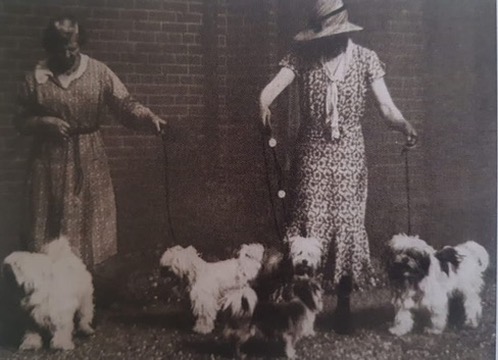
Back in England she bred generation after generation alongside her mother, Mrs. A. Greig, under the Lamleh and Ladkok affixes, and through their tireless efforts The Kennel Club granted the breed separate championship status in 1937. Dr. Greig always championed the Tibetan Terrier as a sturdy, natural working dog rather than a pampered show pet — a conviction she held right up until her death in 1972.
Her dogs reached the United States in 1956, when Dr. Henry and Alice Murphy of Great Falls, Virginia imported the first pair from England. One of them, a puppy named Gremlin Cortina, so captured Alice that she went on to found her own kennel — Lamleh of Kalai — carrying Dr. Greig’s Lamleh name forward onto American soil. The Tibetan Terrier Club of America followed in 1957, and the breed was admitted to AKC registration in 1973. Today Dr. Greig’s bloodlines still run through pedigrees the world over — our own among them.
Temperament
Sensitive, clever, and devoted
Bonded for life
TTs bond deeply with their people. They want to be part of everything — following you from room to room, keeping you company through the ordinary moments of the day. What they need most isn’t a big yard; it’s you.
Bright & intuitive
Intelligent and quick to read a room, they respond beautifully to patient, positive training and can be a touch sensitive to harshness.
Playful & surefooted
Agile and athletic, with a love of hiking, play, and adventure — a legacy of generations spent navigating mountain terrain.
What they look like
Built for snow and rock
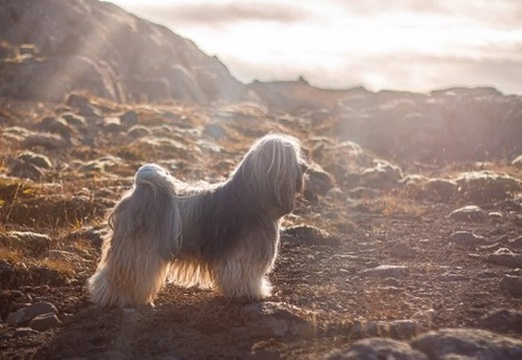
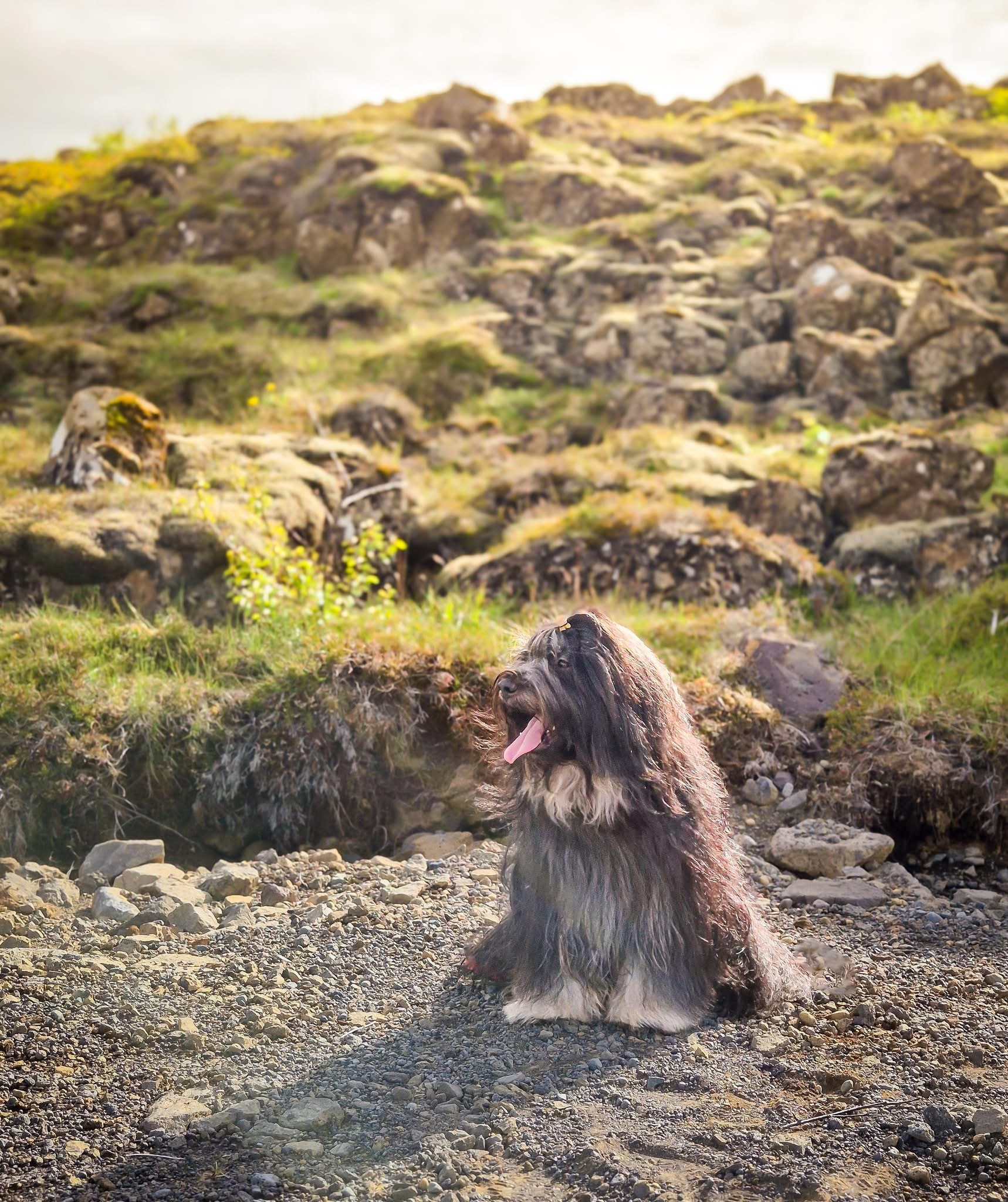
Tibetan Terriers are medium-sized and squarely built, with a compact, powerful frame that belies their size. They carry a profuse double coat: a soft, woolly undercoat for warmth beneath a long, fine topcoat with the texture of human hair, falling in a natural part along the spine. It comes in nearly every color — gold, white, black, silver, brindle, and parti combinations — and a signature fall of hair drapes over the eyes, though long lashes keep it clear of their vision.
Their most distinctive feature is their feet: large, flat, and round, with hair between well-cushioned pads — natural snowshoes that gave them traction and float across deep snow and loose rock in the Himalayas. Combined with a flexible, well-muscled build, those feet made them remarkably surefooted, able to scramble over terrain that would stop most dogs and even retrieve articles that tumbled down the mountainside.
The coat is striking but practical. With regular brushing it stays healthy and tangle-free, and many families keep it in a shorter “puppy cut” for easy upkeep.
| Trait | At a glance |
|---|---|
| Height | 14–17 in (36–43 cm) |
| Weight | 18–30 lb (8–14 kg) |
| Coat | Double; long, fine topcoat |
| Colors | Any — gold, white, black, brindle, parti |
| Lifespan | 15–16 years |
| AKC group | Non-Sporting |
| Origin | Tibet |
| AKC recognized | 1973 |
Conformation
The official AKC breed standard
Every RockSteady dog is measured against the American Kennel Club’s official standard for the Tibetan Terrier — the detailed written description used by judges in the show ring to evaluate structure, coat, movement, and temperament. It covers everything from head and body proportions to gait, temperament, and color.
Living with a TT
Day to day
Grooming
Brush a few times a week to keep the double coat healthy and mat-free. Many owners opt for a shorter trim — both are perfectly good choices.
Exercise
Daily walks plus room to play. They love hikes and off-leash adventures, but they’re just as content curled up with their family afterward.
Health
A generally hardy, long-lived breed. Responsible health testing of the parents is the best safeguard — see our full protocol.
Thinking about a Tibetan Terrier?
Tell us a bit about your household and what you’re looking for — we’ll let you know where things stand with our current and upcoming litters.
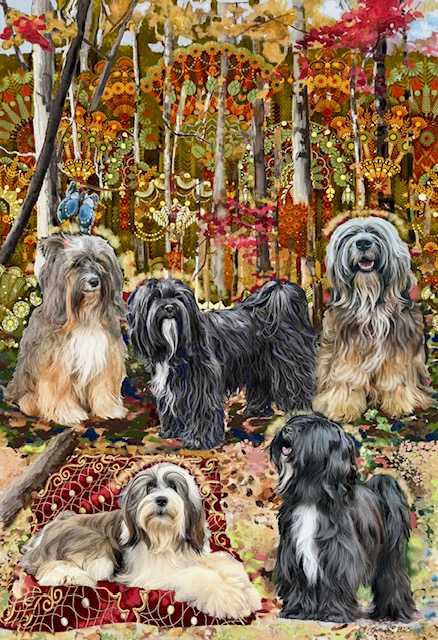
“Family” — by Sheryl Getman.